

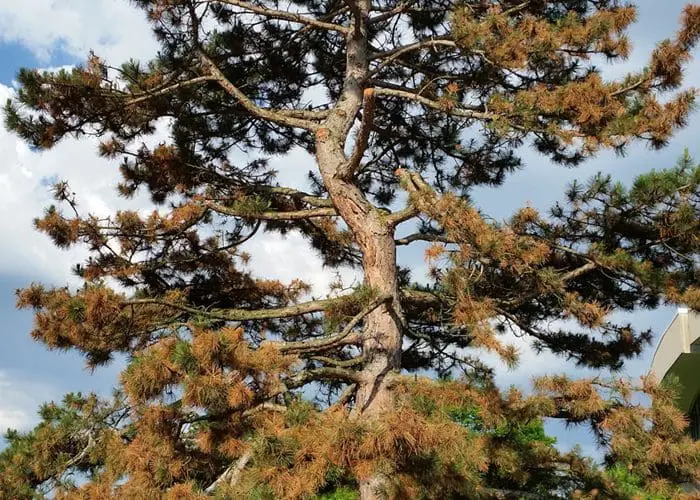
Diplodia tip blight is a fungal disease common in stressed pine trees, particularly pines with needles in bunches of 2. In a forest environment, this disease is not common. In urban environments, trees are more susceptible due to multiple causes of stress. Tip blight can kill all current year shoots, and multiple years of infection can cause branches to die resulting in a disfigured tree at best. Or even worse, a dead tree. It is almost the time of the year for fungicide applications to stop the spread, here’s the information you need to know about tip blight.
What Trees Are Vulnerable To Diplodia Tip Blight?
The disease is most common in pines such as the Austrian pine and the Scots pine. Certain spruce trees can also contract the disease such as the Blue spruce and the Norway spruce. All of these trees are more vulnerable when experiencing stress from the following conditions:
- Drought
- Poor planting site
- Restricted root zone
- Compact soil
- Insect activity
Symptoms Of Tip Blight Disease
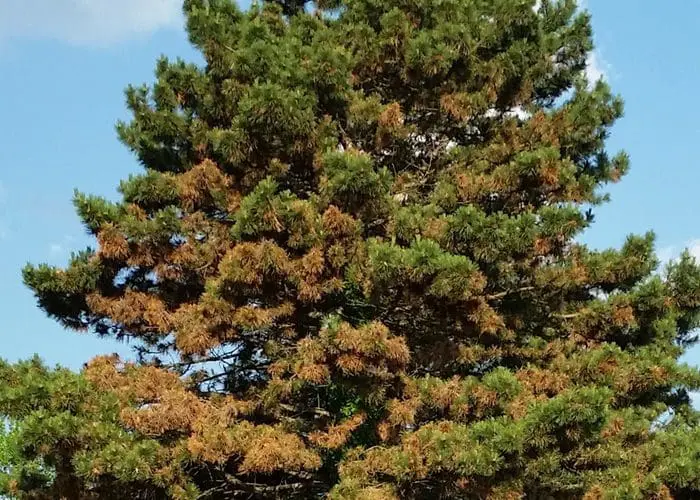
As new needles are expanding throughout the growing season, new needles become stunted. They will then turn yellow, then turn brown, and then they will fall off. The disease will usually kill all new needles each season. Eventually, branches will start to die back from the new growth inward towards the trunk, resulting in the disfigurement of the tree.
In the image to the right, you can see patches of new needles that have died off. After a couple more years of infection, those entire branches will die and the tree will begin to disfigure.
When Should Your Trees Be Treated
New needles can only be infected during the spring when they are growing. This is why it is crucial to call a professional tree service company to perform a fungicide application right at bud break in the early spring. You should ask for one more treatment 10 days after the first treatment.
Additional Recommendations
- Watering – reducing drought stress is critical
- Proper mulching – 3 or 4 inch deep even layer of mulch around the tree, but not packed in a mound against the trunk
- Removing deadwood – we can remove the dead and dying branches, which is where the fungus resides
Call A Tree Expert
If you are worried that your trees may contract or already have diplodia tip blight, do not hesitate to contact us!
